东方留白装置艺术海报提示词
- 模型
- ChatGPT
- 来源
- @MrLarus
- 收录
- 2026-07-30
提示词
1,791 字
[Original Poem Sentence]: [Fill in]
[Two-word Title]: [Extracted from the original sentence]
[Remaining Short Phrase]: [Fill in]
[Core Heavy Object]: [Fill in]
[Light Embossing]: [Fill in]
[Minimal Narrative Element]: [Fill in]
[Main Color Light]: [Fill in]
[English Title]: [Fill in]
[Date]:

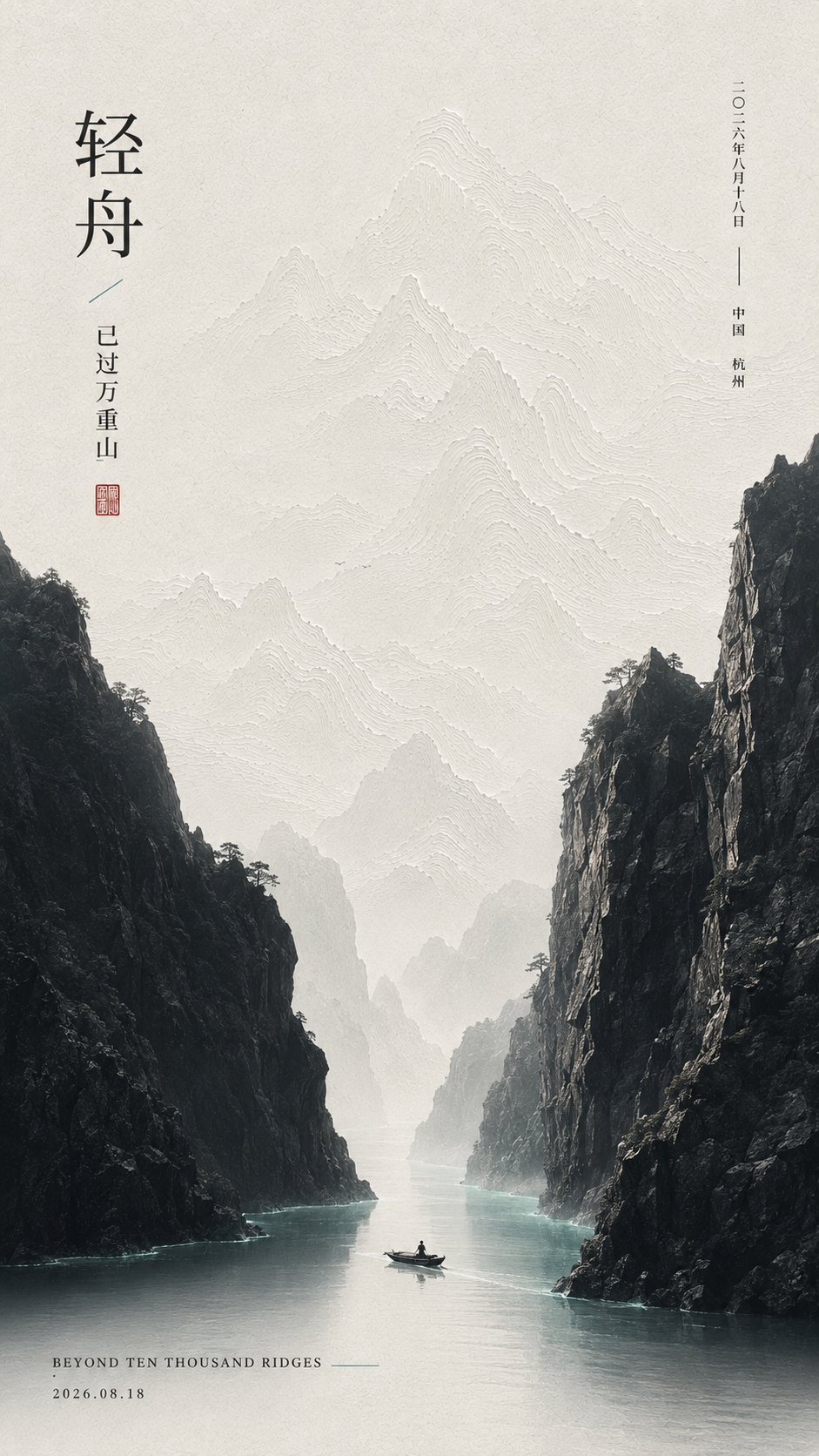
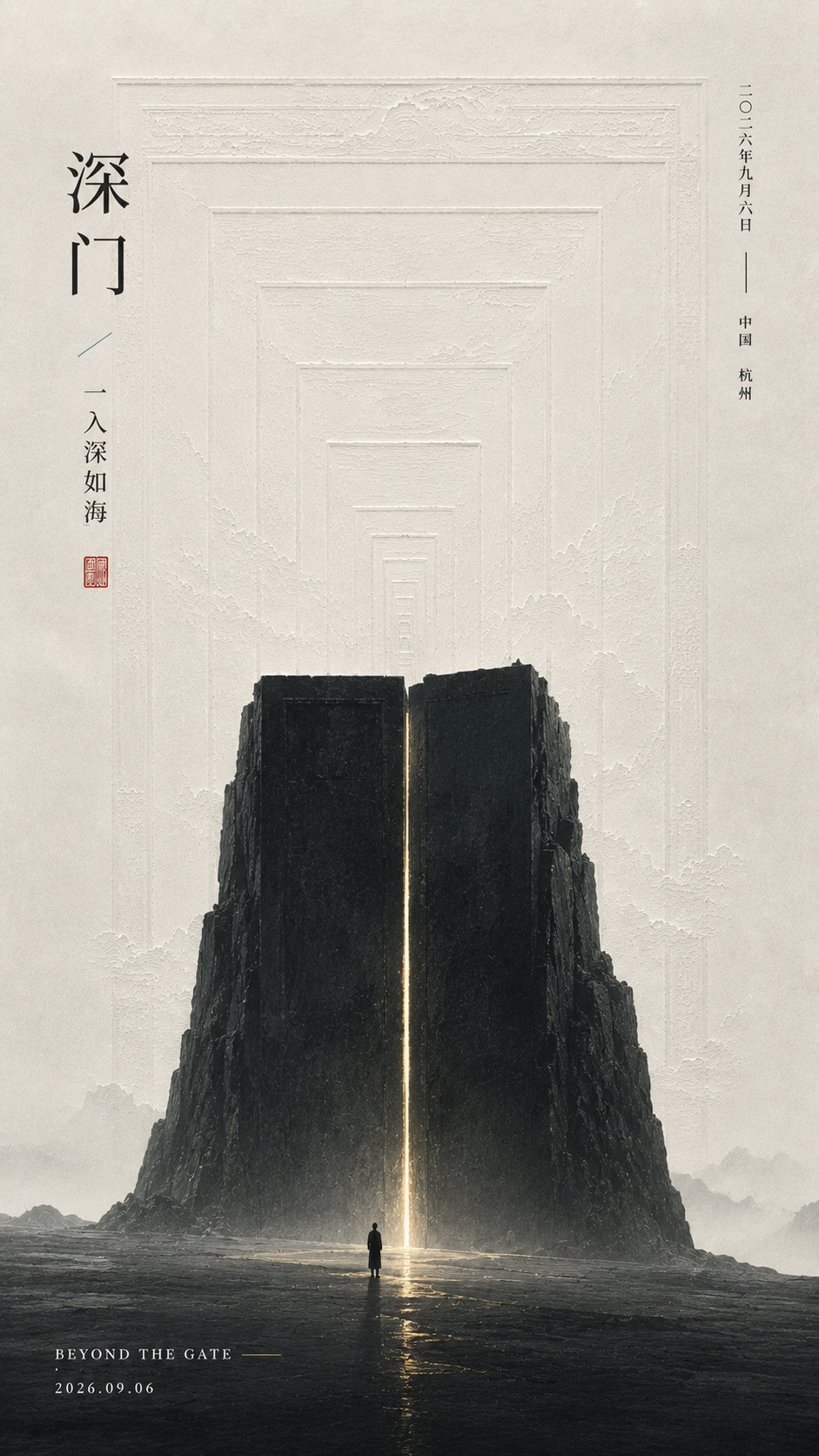
Generate a 9:16 vertical Oriental white space art poster, transforming the artistic conception of the [Original Poem Sentence] into a visual image.

Use a warm ivory white handmade art paper background, retaining paper fibers, pulp particles, and high-end printing texture. In large areas of white space, add [Light Embossing] related to the theme, using a low-contrast bas-relief form that is restrained from afar and layered up close.

Set a [Core Heavy Object] with clear outlines and heavy material in the scene, paired with tiny [Minimal Narrative Elements] to create a contrast between vast scale and tiny figures. Use [Main Color Light] to enter the surrounding space through cracks, fog, reflections, or light paths, serving as the only clear color focus.

The composition should avoid common centered displays, allowing dark entities, light-colored embossing, small figures, and large white spaces to form clear spatial relationships. The overall piece should have weight, lightness, scale, and poetry.

Only keep the following text:
[Two-word Title]
[Remaining Short Phrase]
[English Title]
[Date]

Use modern Songti or Mingti fonts with restrained and clear layout. The overall style is like a high-end exhibition poster combining Oriental poetry and contemporary installation art.

Avoid traditional ancient-style illustrations, tourism landscapes, pure blank backgrounds, overly faint subjects, multiple people, excessive colors, dense text, cheap 3D, and exaggerated special effects.
511 字
【原诗句】:【填写】
【两字标题】:【从原句中摘出】
【剩余短句】:【填写】
【核心重物件】:【填写】
【浅压纹】:【填写】
【极小叙事元素】:【填写】
【主色光】:【填写】
【英文标题】:【填写】
【日期】:

生成一张 9:16 竖版东方留白艺术海报,把【原诗句】的意境重新转化为画面。

使用温润象牙白手工艺术纸背景,保留纸纤维、纸浆颗粒和高级印刷质感。在大面积留白中加入与主题相关的【浅压纹】,采用低对比浅浮雕形式,远看克制,近看有层次。

画面设置一个轮廓清晰、材质厚重的【核心重物件】,搭配极小的【极小叙事元素】,形成巨大尺度与微小人物之间的反差。使用【主色光】通过裂隙、雾气、倒影或光路进入周围空间,成为唯一明确的颜色焦点。

构图避免普通居中展示,让深色实体、浅色压纹、小人物和大面积留白形成清晰的空间关系。整体要有厚重感、轻盈感、尺度感和诗意。

文字只保留:
【两字标题】
【剩余短句】
【英文标题】
【日期】

使用现代宋体或明朝体,排版克制清晰。整体像东方诗意与当代装置艺术结合的高级展览海报。

避免传统古风插画、旅游山水、背景纯空白、主体过淡、多人、过多颜色、密集文字、廉价 3D 和夸张特效。